If you’ve ever stood on a Florida jobsite squinting up at a roofline, a warehouse ceiling, or a cluster of utility lines and thought, “what boom lift height do I need for this project?” you’re asking exactly the right question. Choosing the wrong lift height doesn’t just slow down your crew. It creates safety risks, inflates your rental costs, and turns a straightforward job into a frustrating one.
Whether you’re managing a multi-story commercial build in Gainesville, tackling exterior maintenance on a warehouse in Ocala, or running electrical work in Tallahassee, this boom lift height guide for Florida contractors and maintenance crews will give you the clarity to make the right call every time.
Why Boom Lift Height Selection Actually Matters
Here’s something a lot of contractors learn the hard way: boom lift working height and boom lift platform height are not the same number. Platform height is where the floor of the basket sits. Working height assumes a worker standing in the basket adds roughly 6 feet. A lift with a 34-foot platform height gives you about 40 feet of working height.
Choosing a lift that’s even 5 feet too short means your crew is reaching, stretching, or worse finding improvised workarounds that violate boom lift safety requirements. Choosing one that’s massively oversized means you’re paying for vertical reach capacity you’re not using. Getting this right is both a productivity decision and a safety decision.
The Most Googled Question: What Height Boom Lift Do I Need for a 2-Story Building?
This is the question contractors search more than almost any other, and the answer is more specific than you might expect.
A standard 2-story commercial building in Florida typically runs 24 to 30 feet from ground to roofline, depending on ceiling heights and parapet walls. For exterior work window installation, facade repairs, signage you’ll generally want a boom lift with a platform height of around 30 to 34 feet, giving you a working height of 36 to 40 feet. That buffer matters because it lets your crew work comfortably without reaching maximum extension.
If the structure has an elevated foundation or you’re working on a slope (common on Florida commercial properties with drainage grades), add a few feet to your estimate to stay safe.
General Rule of Thumb: Add 6 feet to the true height of your work surface to determine minimum platform height. Then add a 4–6 foot comfort buffer. That’s your target.
Boom Lift Height Guide: Matching Lift to Job Type
Here’s a practical aerial lift height chart to match common Florida jobsite applications to the right lift size:
| Working Height Needed | Platform Height | Recommended Lift | Typical Application |
| Up to 30 ft | ~24 ft | 26–30 ft Articulating | Single-story rooflines, ceiling maintenance |
| 30–45 ft | ~34–40 ft | 40 ft Boom Lift | 2-story buildings, exterior facades |
| 45–60 ft | ~45–54 ft | 50–60 ft Boom Lift | Multi-story commercial, large warehouse interiors |
| 60–80 ft | ~60–74 ft | 65–80 ft Boom Lift | Mid-rise construction, stadium lighting, tall retail |
| 80 ft+ | ~80+ ft | 86 ft Telescopic | High-rise facades, telecom towers, bridge inspection |
Use this as your starting lift height calculator baseline, then adjust for site-specific conditions.
Articulating vs. Telescopic: Which Boom Lift Type Is Right for You?
Once you know your height requirement, the next decision is boom lift type and this is where a lot of rental decisions go sideways.
Articulating Boom Lifts
An articulating boom lift has multiple jointed sections that allow the arm to bend and reach over obstacles. If your Florida jobsite involves working around rooflines, HVAC units, parapets, or any kind of horizontal obstruction between your machine and your work surface, an articulating lift is your answer.
They’re also ideal for aerial work platform rental on tight urban lots in downtown Tallahassee or Gainesville where you need to navigate around existing structures without repositioning the machine constantly.
Best for: Maintenance work, irregular access points, working over obstacles, outdoor boom lift projects with uneven terrain.
Telescopic Boom Lifts
A telescopic boom lift extends in a straight line, offering superior horizontal reach and maximum boom lift reach capacity at height. When you need pure vertical access in a wide-open space, a commercial construction site, a large warehouse interior, or a big-box retail exterior, a telescope is faster and more efficient.
Telescopic lifts also tend to handle Florida’s outdoor jobsite conditions well, with drive capability at full height and better stability on graded surfaces.
Best for: Construction boom lift rental in Florida, open-site commercial builds, warehouse maintenance, telecom and utilities work.
Side-by-Side: Articulating vs. Telescopic
| Feature | Articulating | Telescopic |
| Reach over obstacles | Excellent | Limited |
| Horizontal outreach | Moderate | Superior |
| Best for tight spaces | Yes | No |
| Open-site efficiency | Moderate | Excellent |
| Florida outdoor use | Very Good | Excellent |
How Florida’s Climate Affects Your Boom Lift Decision
This is a factor that out-of-state contractors often underestimate: Florida weather is not a minor variable on a jobsite. When you’re selecting high-reach access equipment for Florida projects, you need to think beyond just height.
Wind load matters: Most boom lifts have maximum wind ratings in the 28–30 mph range. Florida’s afternoon thunderstorm season brings gusts that exceed that regularly. If you’re working on a vertical reach equipment rental for a multi-week project, build weather delays into your timeline and ensure your operator understands safe shutdown procedures.
Ground conditions matter: Florida’s sandy soils and frequent rainfall create soft ground conditions that can affect lift stability. For outdoor lifts, confirm whether you need outrigger pads or whether a rough-terrain model is the right choice for your surface.
Humidity and equipment performance: High humidity accelerates corrosion on jobsite equipment. Always inspect hydraulic lines, electrical connections, and platform integrity before use and work with a construction equipment rental company that maintains their fleet proactively.
Boom Lift Applications: Industry-Specific Height Recommendations
Commercial Construction: Multi-story commercial builds in Florida office complexes, retail centers, mixed-use developments typically require boom lifts in the 40 to 65 foot range during structural phases, with 86-foot telescopic lifts for curtain wall and facade installation on taller structures. The best boom lift rental for commercial construction combines adequate height with sufficient platform capacity to carry tools and materials safely.
Warehouse Maintenance: Boom lift rental for warehouse maintenance is one of the most common applications across Florida’s booming distribution and logistics sector. Ceiling heights in modern Florida warehouses typically run 30 to 45 feet clear, which means a 40 to 50 foot articulating boom covers the vast majority of applications lighting retrofits, sprinkler system maintenance, HVAC service, and racking installation.
Outdoor Infrastructure and Utilities: Outdoor utility and telecom work, highway signage, and jobsite equipment rental for bridge or overpass maintenance often demands lifts in the 60 to 86 foot range. Telescopic booms with rough-terrain capability are the standard choice for these applications.
Stadium and Arena Projects: Florida’s major sports venues, amphitheaters, and entertainment complexes push into the 65 to 86 foot range for lighting grid work, rigging, and structural maintenance. Outreach at height, not just raw vertical reach, is critical here.
The Boom Lift Specifications You Need to Check Before Renting
Beyond height, smart boom lift specifications review includes:
Platform capacity: Can it safely carry your crew plus tools? Most platforms handle 500–1,000 lbs, but verify this before loading up.
Horizontal outreach: Particularly for telescopic lifts, how far can the boom extend horizontally while maintaining full load rating?
Drive speed and gradeability: Can the machine maneuver efficiently on your specific site terrain?
Fuel type: Electric boom lifts are ideal for enclosed warehouse environments. Diesel or dual-fuel models handle Florida’s outdoor commercial sites better.
Footprint and transport width: Urban jobsites and gated commercial properties have access constraints. Confirm the machine fits through your entry points before delivery day.
Why Trust Us
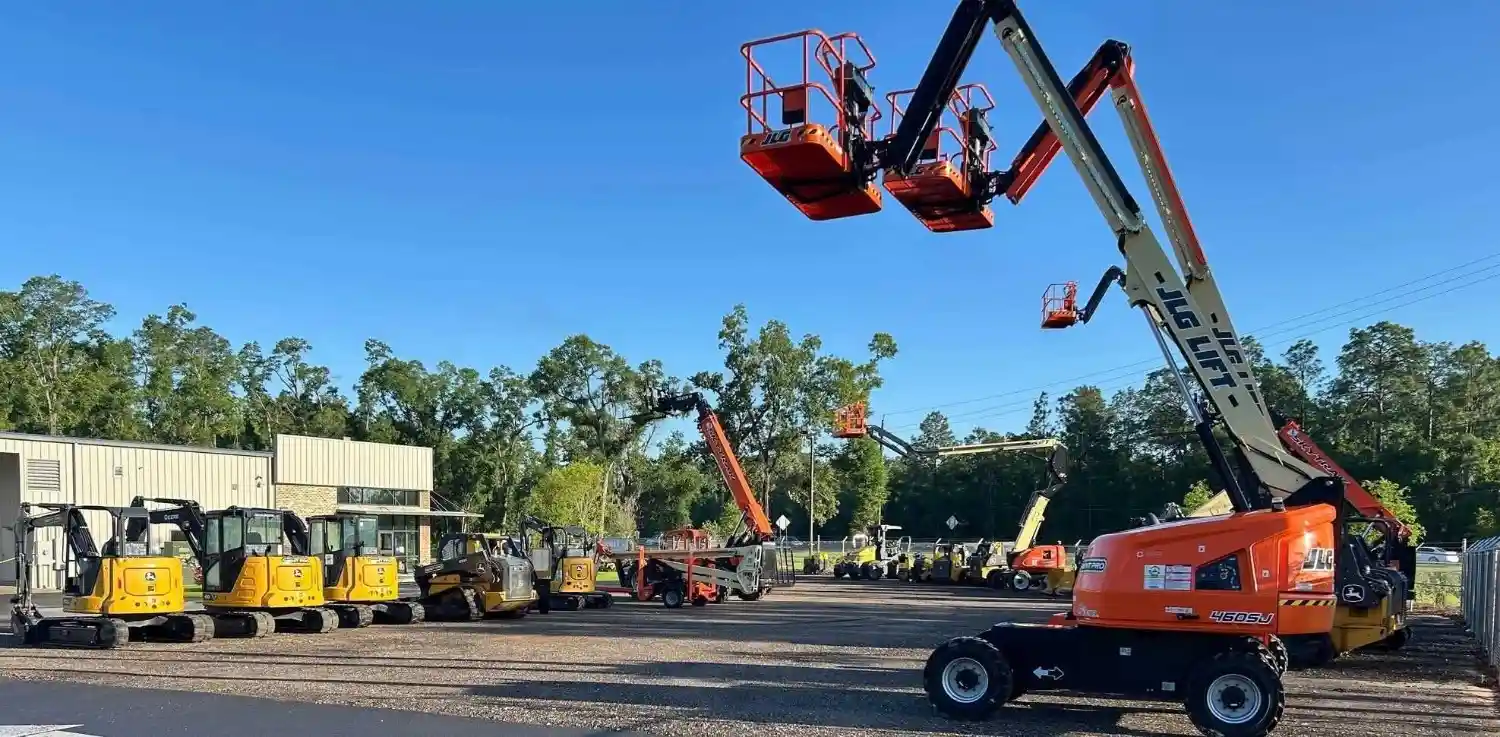
Rent Pro has been serving Florida and Georgia contractors across four locations Gainesville, Ocala, Tallahassee, and Quitman, GA with a fleet of well-maintained aerial work platforms, boom lifts, and commercial construction equipment that’s ready when your crew is. Our team doesn’t just hand you keys; we help you specify the right lift for your specific project, terrain, and timeline so you’re never paying for capacity you don’t need or operating equipment that’s wrong for the job.
When safety, uptime, and your project schedule all depend on making the right equipment call, experience matters.
Frequently Asked Questions
Q1: What boom lift height do I need for a standard 2-story commercial building in Florida?
For a typical 2-story building (24–30 ft to roofline), a 40-foot boom lift provides the right working height with a safe comfort buffer for your crew.
Q2: What is the difference between boom lift platform height and working height?
Platform height is the basket’s elevation from the ground. Working height adds approximately 6 feet, accounting for a standing operator always use working height when specifying your job requirements.
Q3: Should I rent an articulating or telescopic boom lift for a Florida warehouse project?
Articulating lifts are better for working around obstructions like racking and HVAC units inside warehouses. Telescopic lifts excel in open outdoor commercial construction sites needing maximum horizontal reach.
Q4: What are the standard boom lift safety requirements I need to follow on Florida jobsites?
OSHA requires operators to be trained and authorized, boom lifts must be inspected daily, and weather conditions, particularly wind speed, must be monitored. Fall protection and proper load limits are non-negotiable.
Q5: How do I know what size boom lift I need if my project has multiple work areas at different heights?
Spec to your highest required working height and confirm the lift has adequate outreach for your lower zones. It’s almost always more efficient to rent one properly sized lift than to switch machines mid-project.
Conclusion: Get the Height Right Before You Get on the Job
Choosing the right boom lift height for your Florida construction or maintenance project isn’t guesswork; it’s a matter of knowing your building dimensions, your access needs, your site conditions, and which lift type matches your application. Articulating or telescopic. 40-foot or 86-foot. Indoor or outdoor. Each of these decisions has a real answer once you’ve done the specs correctly.
The cost of getting it wrong in delays, in safety incidents, in a second rental delivery far exceeds the five-minute conversation it takes to get it right.
Rent Pro carries boom lifts from 40 ft to 86 ft. Our team helps you pick the right height for your project. Whether you’re building commercial from the ground up or keeping a facility running efficiently, we have the equipment, the expertise, and four convenient Florida and Georgia locations ready to support your crew. Request Your Rental Today rentproco.com | Call: (352) 830-1100 | Gainesville: (352) 719-0002 | Tallahassee: (850) 759-5700