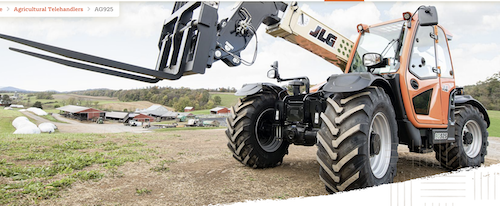
It sounds simple until you realize that choosing a telehandler based on load weight alone is one of the most common and most expensive mistakes on any job site. A machine that handles a 5,000-pound pallet just fine at ground level may become dangerously underpowered the moment that the boom extends outward. We’ve seen this slow down roofing crews in Gainesville, commercial builds in Ocala, and large agricultural operations near Tallahassee more times than we can count. This guide cuts through the generic advice. You’ll walk away knowing exactly which telehandler capacity fits your project before the machine ever arrives on site.
Quick Answer
For residential framing, roofing, drywall, and lighter pallet work, a 5,500 lb telehandler typically handles the job with easier maneuverability on tighter lots.
For masonry, steel, bulk agricultural materials, or any work requiring extended reach at height: a 12,000 lb telehandler gives you the capacity and flexibility to keep crews moving without machine swaps.
The single most important thing most guides skip: telehandler capacity drops as the boom extends. Rated capacity is only available at the minimum reach and the lowest elevation. Real job site loads require real load-chart review.
Why Weight Alone Gets Contractors in Trouble
Here’s how the mistake happens. A contractor checks the pallet weight, say, 4,800 pounds of concrete block. A 5,500 lb telehandler looks fine on paper. The rental order goes in.
Day one, the boom has to reach 14 feet outward to clear a wall section. Available capacity at that extension? Significantly lower than the machine’s rated maximum. The crew spends the rest of the afternoon repositioning, making extra picks, and watching scheduled work fall behind. This isn’t an equipment failure. It’s a selection mistake, one that’s completely avoidable with the right information upfront.
Load chart reality: A 12,000 lb telehandler extended to full horizontal reach does not lift 12,000 lbs. Every model has a load chart showing actual capacity at various boom angles and extensions. Never select a machine based only on its maximum rated capacity. Our team at Rent Pro’s material handling equipment page can walk you through load chart basics before your rental.
5,500 lb vs 12,000 lb Side-by-Side
Here’s a practical comparison built from real Florida job site applications, not spec sheets:
| Factor | 5,500 lb Telehandler | 12,000 lb Telehandler |
| Best Project Type | Residential, light commercial, roofing | Heavy commercial, masonry, and agriculture |
| Tight Site Maneuverability | Easier | More space needed |
| Reach at Full Extension | Moderate | Greater horizontal reach |
| Masonry / Steel Handling | Light loads only | Designed for it |
| Agricultural Use | Smaller scale | Hay, feed, bulk material |
| Wet / Sandy Florida Terrain | Lighter footprint advantage | May need firmer ground or mats |
| Attachment Versatility | Standard forks, light truss boom | Wider range of heavy attachments |
| Multi-Phase Project Flexibility | May require upgrade | Handles scope changes |
The Right Telehandler By Project Type
Residential Framing & Roofing
Framing packages, lumber bundles, roofing shingles, and drywall pallets are a natural fit for a 5,500 lb machine. These jobs also tend to involve narrower access, tighter lots, and properties where a smaller footprint moves more freely. If your roofing project involves truss placement at elevation, confirm the required reach before committing to a truss boom attachment, as changes to available capacity math considerably.
Florida residential contractors working in subdivisions with tight street access often find the smaller machine handles their work more efficiently than a larger unit sitting idle at reduced capacity.
Commercial Construction & Masonry
Concrete block, brick, structural steel, and precast components typically push the limits of any smaller machine, especially once the required lift height and placement distance enter the picture. For commercial builds in the Gainesville, Ocala, or Tallahassee areas, most masonry-heavy contractors working with Rent Pro end up with a 12,000 lb unit.
Explore our full construction equipment rental lineup →
Agricultural & Rural Operations
This is where South Georgia and North Florida job sites differ most from national guides. Hay handling, feed movement, bulk liquid containers, and large attachment work on agricultural properties create a unique set of demands. Larger telehandlers provide the reach and capacity that make seasonal workloads manageable without constant repositioning.
Before You Rent: 5 Questions to Ask First
What’s the heaviest single lift?
This is your floor, the minimum rated capacity you need. But it’s only the starting point, not the final answer.
What lift height is required?
Materials going to a second floor or rooftop need a capacity that holds up at elevation. Check the load chart at the working height.
How far will the boom extend?
Horizontal reach is where most under-spec’d rentals fail. The farther out you work, the lower the safe lifting capacity becomes.
What are the ground conditions?
Florida sand, post-rain soil, and rural terrain all affect machine stability differently. Site conditions matter more than many contractors expect.
Will attachments change the work?
Buckets, truss booms, and specialty forks shift both the weight equation and the machine’s handling characteristics throughout the project.
Real Job Site Scenario, North Florida
A commercial contractor came to us requesting a 5,500 lb telehandler for a masonry project outside Gainesville. On paper, the pallet weights fit within the rated capacity. When we walked through the project details, required placement distance from the machine, lift height to the second-floor deck, and the fact that the scope was expanding over the following two weeks, the picture changed completely.
We recommended the 12,000 lb unit. The contractor completed the job without a single equipment swap, avoided two days of estimated repositioning time, and called us again for the next phase without hesitation.
The right machine the first time saves more than just rental days.
Florida Job Sites Are Different
National rental guides are written for average conditions. Florida isn’t average.
- Sandy and soft soil conditions affect ground bearing capacity and machine stability
- Rainy seasons in North Florida can turn firm ground into a different jobsite overnight
- Rural agricultural properties often involve uneven terrain and long material transport distances
- Tight subdivision access limits, which machine sizes can effectively navigate to work areas
- Multi-use sites mixing construction and agricultural work require machines that handle scope changes
In our six years working with contractors, farmers, and property owners across Gainesville, Ocala, Tallahassee, and Quitman, we’ve learned that terrain conversations matter as much as capacity conversations. A telehandler performing well on a compacted commercial site may behave completely differently on a rural agricultural property three miles down the road.
That local experience is exactly what you’re getting when you call Rent Pro, not a national call center without context for your region.
You can also explore our heavy equipment rental options if your project involves earthmoving alongside material handling, or browse our short-term equipment rentals for flexible scheduling that fits project timelines.
The Most Common Telehandler Sizing Mistakes
- Using maximum rated capacity as the working capacity, the rated numbers only apply at specific boom positions. Real work happens at varying extensions.
- Ignoring future project phases, a project that starts light often grows heavier as the scope expands. Choosing flexibility upfront prevents mid-project machine swaps.
- Overlooking attachment impact, a carriage-and-forks setup performs differently than a truss boom or bucket. Plan for every attachment configuration you’ll actually use.
- Defaulting to the largest machine, bigger isn’t always better. A 12,000 lb telehandler on a tight residential lot may create more problems than it solves.
- Skipping the ground condition conversation, Florida terrain variation makes this non-negotiable before any rental decision.
Frequently Asked Questions
Q.1 Does telehandler’s capacity drop when the boom extends horizontally?
Yes, and this is the detail most contractors miss. Every telehandler has a load chart that shows how available lifting capacity changes at different boom angles and horizontal extension distances. The maximum rated capacity only applies at minimum reach with the boom nearly vertical. At full horizontal extension, that number drops substantially. Always review the load chart for your specific lift requirements, not just the machine’s rated maximum.
Q.2 How do Florida’s sandy and wet soil conditions affect telehandler selection?
Ground conditions directly affect machine stability, especially when loads are extended. Soft or sandy Florida soil can reduce the effective outreach capacity and increase the risk of tipping on unstable ground. Larger telehandlers may require timber mats or engineered cribbing on soft sites. Always walk the site and discuss terrain conditions before finalizing which machine you need. Our team at Rent Pro will ask about your ground conditions as part of every rental consultation.
Q.3 Should I factor in future project phases when choosing a telehandler size?
Absolutely, and this is one of the most practical pieces of advice we give contractors. Projects that start with framing materials often evolve into masonry, steel, or mechanical equipment placement as phases progress. Renting slightly more capacity than day-one requirements often eliminates mid-project machine swaps that cost both time and logistics. If you’re working on a multi-phase build, tell us the full scope, and we’ll help you plan accordingly.
Q.4 What types of attachments are commonly used with telehandlers on Florida job sites?
Standard pallet forks handle most material movement, but Florida contractors frequently use truss booms for roofing and framing work, carriage-mounted buckets for bulk material, and pipe hooks or material platforms for specialty applications. Each attachment changes both the machine’s weight distribution and how much of the rated capacity is available for the actual load. If you know which attachments you’ll need, let us know before your rental so we can confirm compatibility with the machine size you’re considering.
Q.5 Is a 12,000 lb telehandler always the safer choice for commercial projects in Florida?
Not automatically. A larger machine on a tight urban lot or a narrow subdivision road can create access problems, maneuverability challenges, and ground pressure concerns that actually reduce job site efficiency. The right choice is always specific to the project load requirements, terrain, site access, and workflow; all play a role. That’s why a brief conversation with our team before any rental decision saves time and money on both ends.
Q.5 Can telehandlers be used for agricultural work alongside construction tasks?
Yes, and this is a common use case across North Florida and South Georgia. Telehandlers handle hay bales, feed bags, bulk containers, and equipment positioning on agricultural properties where a dedicated forklift won’t access uneven terrain. Larger capacity models are typically preferred for agricultural applications due to the variety of load types and the need for extended reach across open property. Our agricultural equipment rental page covers more options if you’re running a mixed-use property.
Not Sure Which Size Is Right?
Rent Pro carries telehandlers from 5,500 to 12,000 lb capacity. Tell us about your project, and we’ll help you choose the right machine before it ever reaches your job site. No guesswork, no mid-project swaps.