Aerial lift rental cost in Florida depends on the lift type, scissor lift, boom lift, or telehandler, along with working height, job duration, terrain, and whether you need electric or diesel equipment.
Scissor lifts work best indoors on flat surfaces. Boom lifts handle height and reach on outdoor sites. Telehandlers are the go-to when material placement matters more than personnel lifting. Choosing the wrong type is the single most common reason contractors overspend, not rental rates themselves.
What Actually Affects Aerial Lift Rental Cost
Before comparing lift types, it helps to understand what drives rental cost in the first place. Most contractors focus only on the daily rate and miss the bigger picture. In reality, these factors combine to determine your total spend:
- Working height: A 20-foot lift and an 80-foot lift are completely different machines with very different rental structures.
- Rental duration: Daily rates are convenient but expensive. Weekly rentals almost always provide significantly better value for projects lasting three or more days.
- Electric vs. diesel Electric lifts cost less to operate and produce no fumes, but are limited to smooth, indoor surfaces. Diesel machines handle rough terrain and open-air job sites.
- Delivery and pickup, especially on coastal Florida sites, can add meaningfully to the total cost.
- Terrain type A rough-terrain scissor lift or an articulating boom is more expensive to rent than a standard electric model, but renting the wrong type for your surface is even more costly.
In our experience working with contractors across Florida and Georgia, most cost overruns happen when the wrong lift type is chosen, not because of the rental rate itself. A scissor lift rented for an outdoor facade job, for example, might appear cheaper upfront but will cost more in lost productivity and extra rental days.
Lift Rentals: When Height and Reach Both Matter
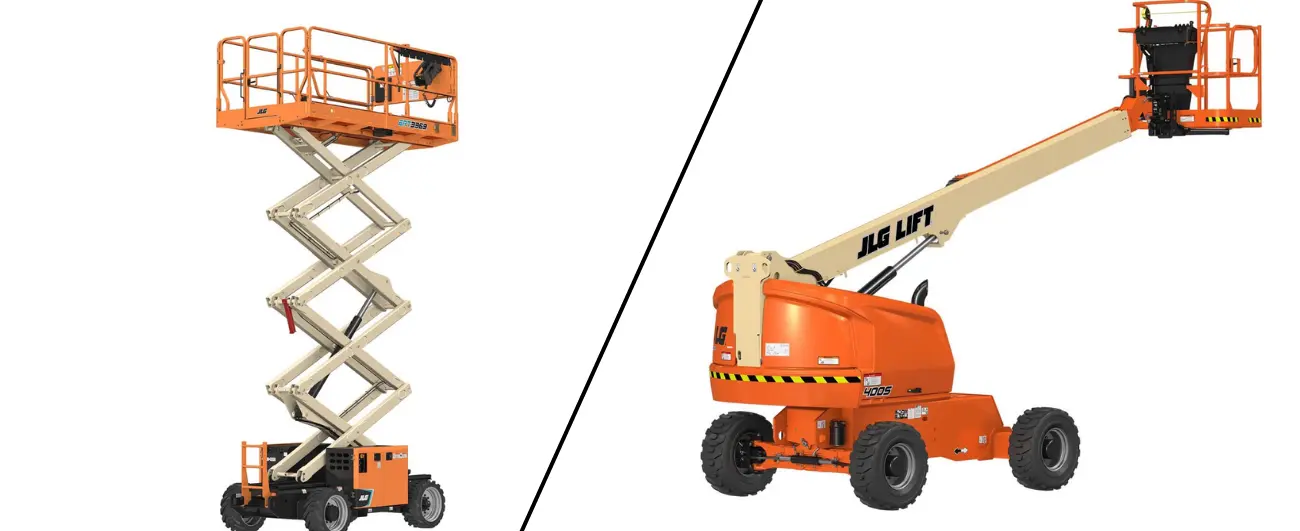
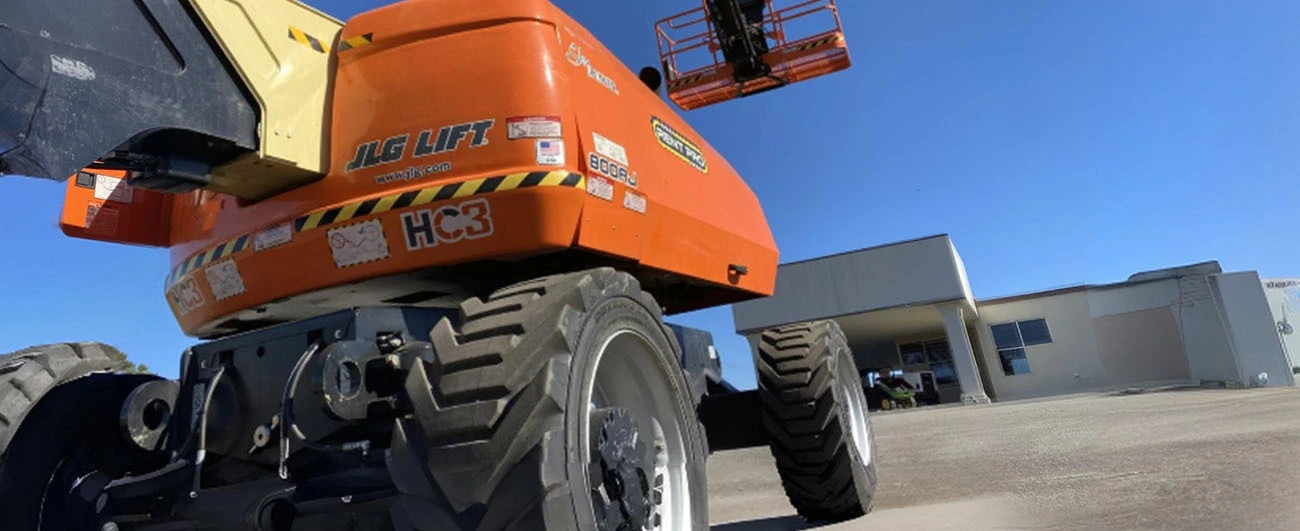
If your project involves significant height, an outdoor environment, or an area that a scissor lift simply cannot reach, a boom lift is almost certainly the right tool. Boom lifts extend both vertically and horizontally, giving operators the ability to position themselves precisely, even when working around obstacles.
Two Main Types
Articulating boom lifts have multiple jointed sections that allow the arm to bend and maneuver around structural obstacles. These are ideal for tight construction sites, rooflines, or anywhere a straight line of travel is blocked.
Telescopic (straight) boom lifts extend in a direct line and offer the maximum possible working height. These are the preferred choice for wide-open outdoor projects where raw reach is the priority.
Our Aerial Work Platforms page lists the specific boom lift models available across all four Rent Pro locations, including options suited for Florida’s coastal and urban job sites.
When to Choose a Boom Lift
- High-rise exterior work facades, roofing, and signage installation
- Outdoor projects on uneven or soft ground
- Anywhere you need horizontal reach, not just vertical height
- Projects near trees, utilities, or structural obstructions
Scissor Lift Rentals: The Efficient Indoor Workhorse
Scissor lifts are the most commonly rented aerial platforms for a reason. They are stable, easy to operate, and highly cost-effective for vertical work in controlled environments. If your job site is indoors or on a flat, paved surface, a scissor lift is almost always the smarter choice over a boom lift.
Electric vs. Rough Terrain
Electric scissor lifts are designed for indoor use in warehouses, retail fit-outs, electrical and HVAC work, and maintenance tasks. They produce no exhaust, operate quietly, and have a lower per-day cost. The trade-off is that they cannot handle soft or uneven ground.
Rough terrain scissor lifts use larger pneumatic tires and a more robust frame to handle outdoor use on grass, gravel, or moderately uneven surfaces. These bridge the gap between a standard scissor lift and a full boom lift. Looking for scissor lift options near Gainesville or Ocala? Our Ocala, FL, location and Gainesville, FL, location both carry electric and rough terrain models with fast availability.
Telehandler Rentals: Beyond Personnel Lifting
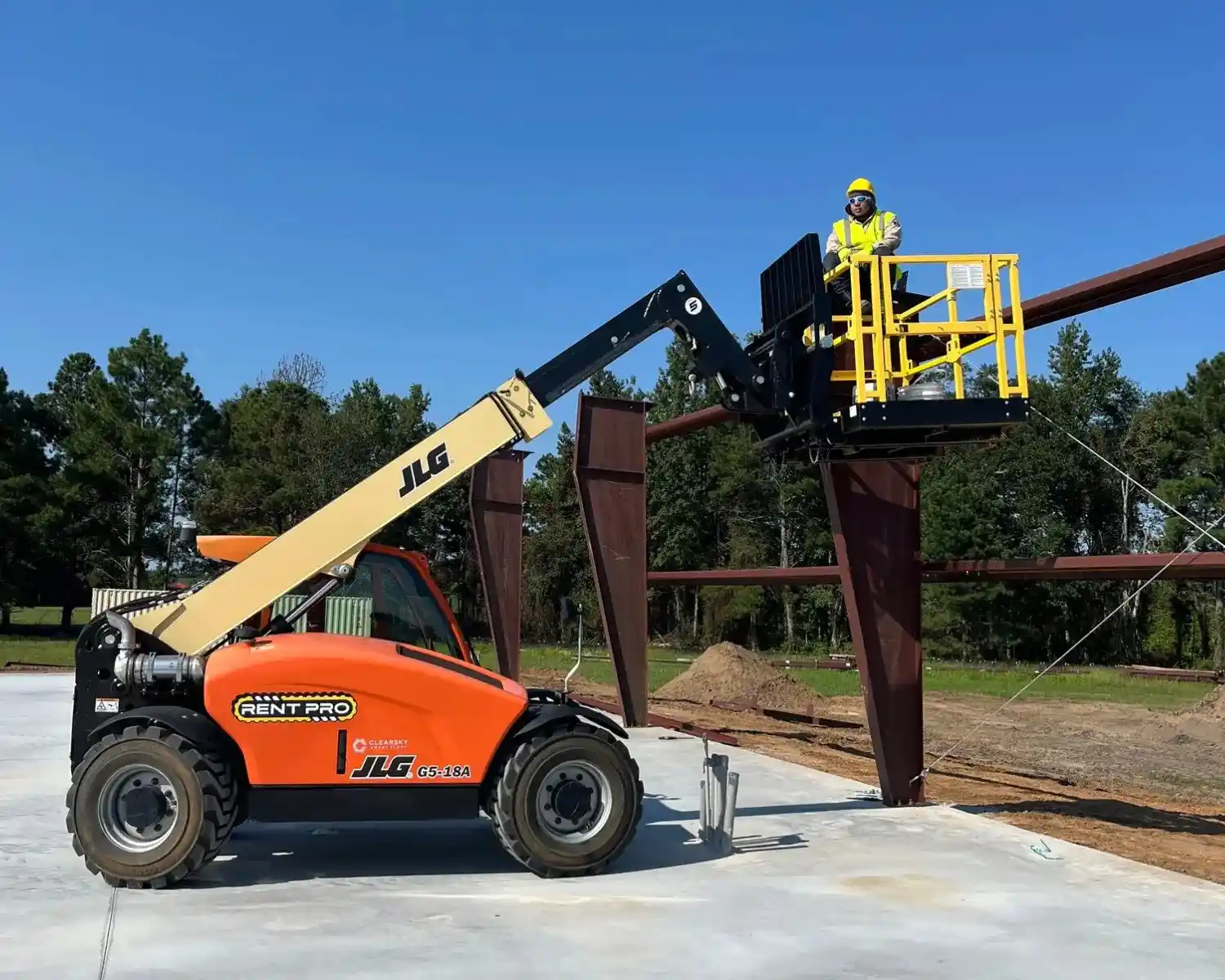
A telehandler, also called a telescopic handler or reach forklift, is technically not an aerial work platform, but it belongs in this comparison because contractors frequently choose between a telehandler and a boom lift when planning material-heavy projects.
The key difference: a boom lift moves people to height. A telehandler moves materials forward and upward, placing loads precisely where they need to go.
Why Contractors Choose Telehandlers
- Combines the function of a rough-terrain forklift and a crane
- Handles loads that would require multiple manual lifts otherwise
- Works efficiently on construction sites, agricultural operations, and large landscaping projects
- Reduces the number of workers needed for material placement tasks
Rent Pro carries telehandlers under our Material Handling Equipment category, alongside forklifts and other load-handling machines suited to Florida and Georgia job sites.
Side-by-Side Comparison: Boom vs. Scissor vs. Telehandler
| Feature | Boom Lift | Scissor Lift | Telehandler |
| Primary Purpose | Elevate personnel with horizontal reach | Elevate personnel vertically | Lift and place heavy materials |
| Best Environment | Outdoor, uneven terrain | Indoor, flat or semi-flat surfaces | All-terrain, outdoor sites |
| Reach Type | Vertical + horizontal (flexible) | Vertical only | Forward reach + height |
| Fuel Type | Diesel (most models) | Electric or diesel | Diesel |
| Skill Level Required | Medium | Easy to moderate | Medium |
| Typical Use Cases | Roofing, facades, high-rise construction | Warehouses, maintenance, and electrical work | Construction staging, agriculture, and landscaping |
Florida vs. Georgia: Does Location Affect Rental Availability?
Location matters more than many contractors expect, especially in a high-growth state like Florida. Coastal urban markets like Miami, Tampa, and Orlando see consistently high equipment demand, which can affect both availability and lead times if you wait too long to book.
Inland Florida cities, Gainesville, Ocala, and Tallahassee often have better equipment availability and shorter notice periods, which benefits contractors running tighter schedules.
In Georgia, rural areas around Quitman tend to have strong agricultural equipment availability alongside construction lifts. The Atlanta corridor sees high demand similar to Florida’s larger cities.
Rent Pro operates across four locations: Tallahassee, FL, Ocala, FL, Gainesville, FL, and Quitman, GA, specifically to give contractors fast access without long delivery windows or cross-state logistics headaches.
How to Choose the Right Lift for Your Project
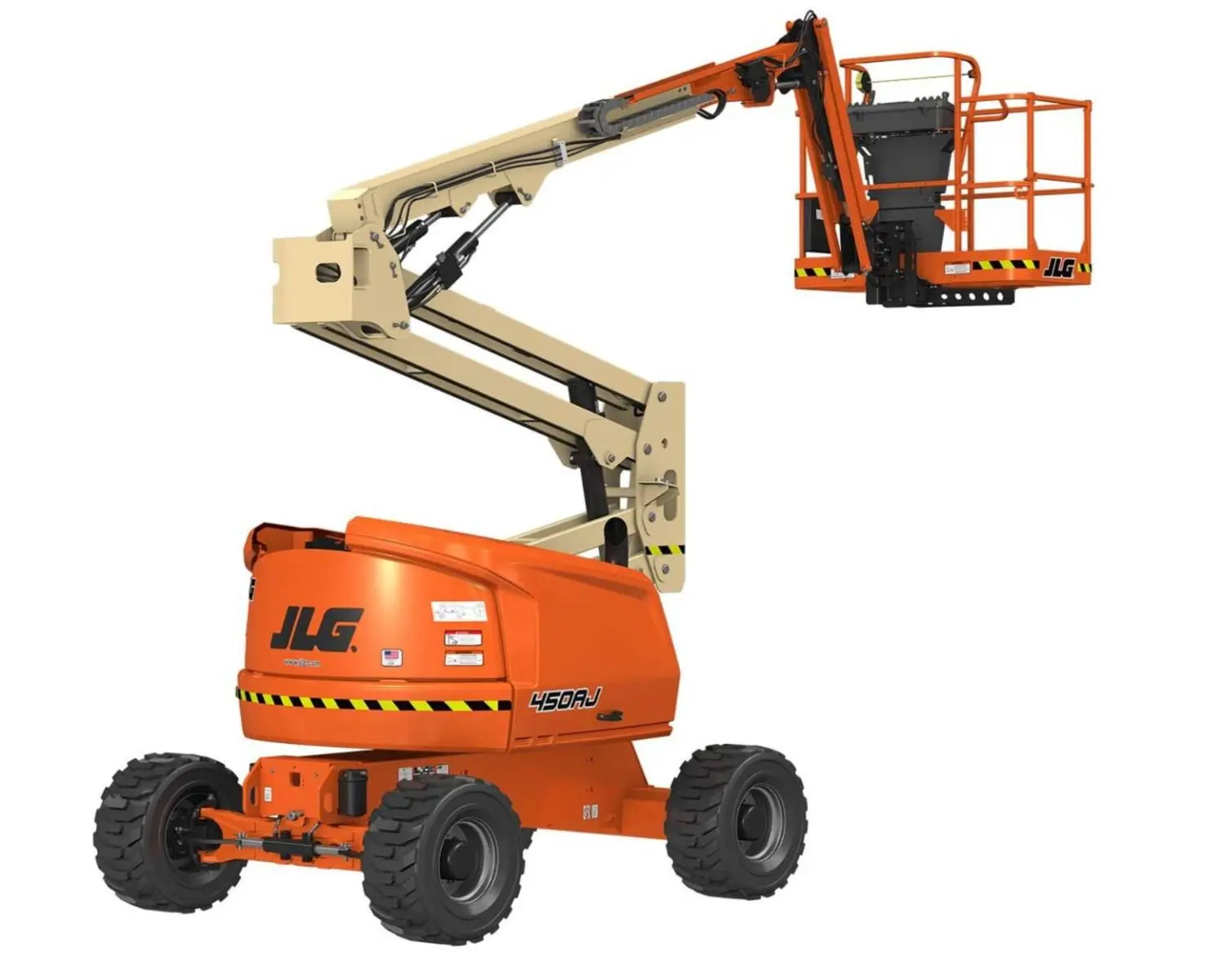
This decision framework is what our team walks contractors through when they call in for a rental quote. Follow these three steps, and you will almost always land on the right machine.
Start with the required working height
Under 30 feet of vertical height? A scissor lift likely handles the job. Between 30 and 80 feet, or needing horizontal reach? A boom lift is your machine. Need to move materials rather than people? Go straight to a telehandler.
Assess your work environment
Indoor, smooth concrete or tile surface, electric scissor lift. Outdoor, flat paved surface, diesel scissor or compact boom. Outdoor, uneven or soft ground, rough terrain boom or articulating boom. Multi-surface or heavy material placement, telehandler.
Match duration to the right rental term
For single-day tasks, a daily rate makes sense. For anything spanning three or more working days, always request weekly pricing. The difference is significant, and most contractors are surprised at how favorable weekly terms can be on construction equipment rentals.
Rent vs. Buy: The Smart Call for Most Projects
This question comes up constantly, and for most contractors working on project-based or seasonal work in Florida and Georgia, renting wins on nearly every financial metric.
Owning an aerial lift means carrying maintenance costs, insurance, storage, and depreciation even during the months when the machine sits unused. Rental gives you access to well-maintained, up-to-date equipment exactly when you need it, with no liability beyond the rental period.
The argument for buying only holds when your equipment utilization rate is consistently high across a long calendar year, typically 200+ days of active use annually. For general contractors, landscapers, and agricultural operators who use lifts seasonally or project-to-project, short-term equipment rental remains the financially sound choice.
If your needs are ongoing but not quite enough to justify ownership, Rent Pro also offers long-term equipment leasing, a middle ground that gives you consistent access without the full cost of purchase.
Why Florida & Georgia Contractors Trust Rent Pro
Rent Pro (Ag-Pro Rentals) has been serving contractors, farmers, and property owners across Florida and Georgia for over six years. With four locations, a broad inventory of JLG and Genie aerial lifts, and a team that picks up the phone, we are built for the pace of real project work, not just equipment transactions.
Frequently Asked Questions
Q. 1 How much is it to rent a 30 ft boom lift?
Boom lift rental rates vary based on model, location, rental duration, and current equipment availability. A 30-foot boom lift is on the smaller end of the range and will be priced lower than larger 60- or 80-foot machines. The best way to get an accurate figure for your specific project is to contact Rent Pro directly. We provide quotes within 24 hours across all four locations.
Q. 2 Is a boom lift considered an aerial lift?
Yes. A boom lift is one of the primary categories of aerial work platforms (AWPs). It is designed to lift personnel to elevated work positions with both vertical and horizontal reach capability. Scissor lifts and vertical mast lifts are the other main aerial lift types.
Q. 3 Is it better to rent or buy a boom lift for a construction project?
For most contractors doing project-based or seasonal work, renting is significantly more cost-effective. Ownership requires maintenance, storage, insurance, and capital that most operators can deploy more productively elsewhere. Renting also lets you match the exact machine to each specific job rather than making do with what you own.
Q. 4 What are the three main types of aerial lifts?
The three primary types of aerial lifts are boom lifts (articulating and telescopic), scissor lifts (electric and rough terrain), and vertical mast lifts. Each serves a different combination of height, reach, and environmental needs. Telehandlers are a related category but function as material handlers rather than personnel platforms.
Q. 5 Do I need certification to rent or operate a boom lift?
You do not always need a formal certification to rent a boom lift, but OSHA regulations require that all aerial lift operators be properly trained before use. Most rental companies, including Rent Pro, will ask about operator qualifications. We strongly recommend ensuring your operators have completed an OSHA-aligned training program before stepping into the basket.
Q. 6 Can a telehandler replace a boom lift on a construction site?
Only partially. A telehandler is excellent for moving and placing heavy materials at height or distance, but it is not designed to carry personnel in most configurations (without a certified work platform attachment). If your project requires both material handling and elevated personnel access, you may need both machine types or a telehandler with a work platform attachment where site conditions permit.
Ready to Pick the Right Lift for Your Project?
Get exact pricing for your job site. Rent Pro provides quotes within 24 hours across all four Florida and Georgia locations.